The AI Your Employees Are Already Using And Why Every Business Leader Should Care
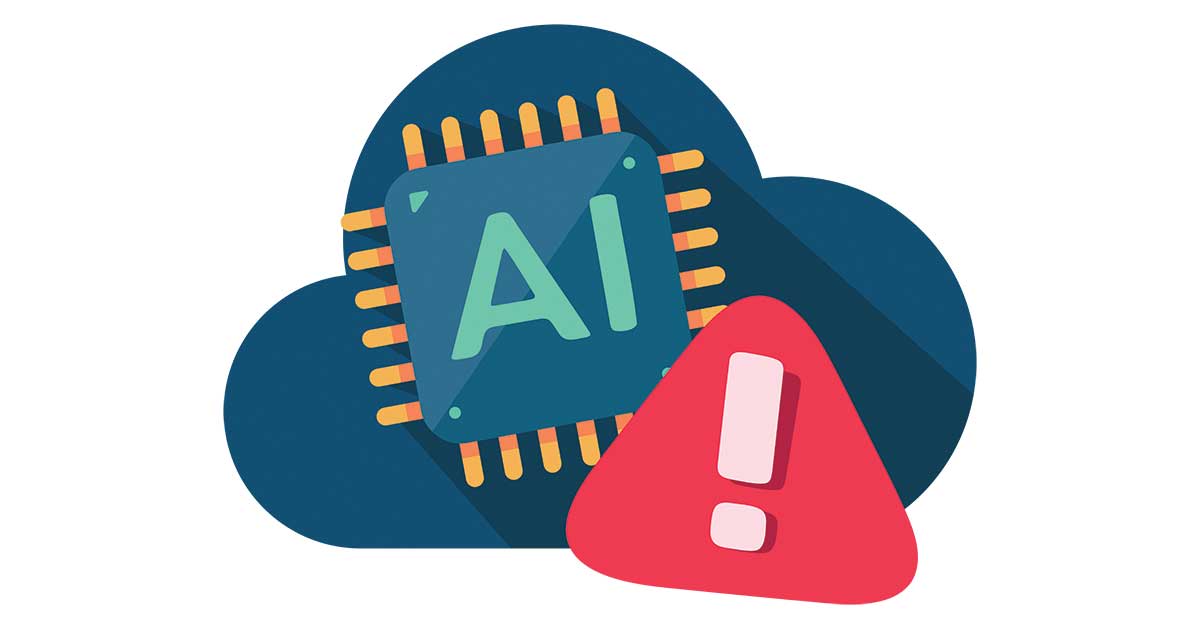
Your employees are likely using generative AI tools like ChatGPT, Microsoft Copilot, Gemini, and free browser extensions without IT approval. This is called Shadow AI, and it puts sensitive business data, customer information, and regulatory compliance at risk. The solution is not banning AI, it is gaining visibility into how it is being used and putting smart guardrails in place.
If you run a business today, there is a very good chance your employees are using AI tools you have never approved, never reviewed, and never even heard of. Not because they are doing anything wrong. They are just trying to get their work done faster.
That is the challenge. Generative AI is already inside your company, whether you have a strategy for it or not.
What Is Shadow AI?
Shadow AI is any artificial intelligence tool an employee uses for work without IT’s knowledge or approval. It is the AI equivalent of Shadow IT, and it is growing fast as free and low-cost generative AI tools become available in every browser and app store.
Shadow AI is not always a rogue download or a sketchy app. Most of the time, it looks completely ordinary:
- A salesperson pasting a prospect list into ChatGPT to draft outreach emails.
- A bookkeeper uploading a spreadsheet to an AI tool to summarize quarterly numbers.
- A paralegal asking an AI assistant to review contract language.
- A developer using a free code assistant that quietly sends source code to a third-party server.
- A marketing coordinator installing a browser extension that promises to “supercharge” their writing.
Each of these moments feels small. Add them up across an entire workforce, and you have a steady stream of company data flowing into AI platforms you do not control.
Why Is Shadow AI a Security Risk?
The risk is not that AI is bad. The risk is that nobody can see what is happening.
Most business owners we talk to cannot answer a few basic questions about AI in their company:
- Which AI tools are employees actually using?
- What kind of information is being typed into those tools?
- Where does that data go once it leaves the prompt?
- Are any of those tools storing or training on what your team shares?
If you cannot answer those questions, you cannot manage the risk. And if your business handles regulated data, financial records, healthcare information, legal files, or customer PII, the stakes get higher fast.
Why Traditional Security Tools Miss Shadow AI
Here is the part that catches a lot of leaders off guard. The security tools most businesses already have in place were not built for this.
Traditional data loss prevention (DLP) tools were designed to watch for files leaving the network or sensitive data being attached to an email. They were not designed to read a conversation. When an employee types a paragraph into a chatbot that includes a client’s name, a Social Security number, or a confidential strategy, legacy tools have no way to understand the context of what was just shared.
That means most companies have a blind spot they do not know about. AI usage is happening, sensitive data is moving, and the dashboards leadership relies on are not showing any of it.
How Can Businesses Manage Shadow AI Safely?
You do not need to ban AI to protect your business. In fact, that approach almost always backfires. Employees find workarounds, and you lose the productivity benefits AI can bring.
The better path is visibility first, then guardrails. Start by asking:
- Do we know which AI tools are in use across our team? You cannot govern what you cannot see.
- Do we have a written AI usage policy? Employees need clear rules about what is and is not okay to share in a prompt.
- Do we have a way to enforce that policy without slowing people down? Policy on paper does not protect data in practice.
If the answer to any of those is “not really,” it is time to have a conversation about AI security.
Key Takeaways for Business Leaders
- Shadow AI is already inside most companies, often without leadership awareness.
- Sensitive data shared in AI prompts can lead to compliance violations and data leaks.
- Legacy DLP tools cannot interpret conversational prompts, leaving a major gap.
- The fix is visibility and governance, not prohibition.
- A managed IT and cybersecurity partner can help you discover, govern, and protect AI usage across your workforce.
How Louisville Geek Helps Businesses Secure Employee AI Usage
Louisville Geek is partnering with Check Point to bring Workforce AI Security to businesses across Kentucky and the surrounding region. It is a solution built specifically for this moment, designed to discover every AI tool in use, govern how employees interact with them, and protect sensitive data in real time.
The most important step is awareness. If you do not know what AI your employees are using, you are not alone. That is exactly the problem we help solve.
Ready to find out what AI is running inside your business? Contact Louisville Geek to schedule a Workforce AI Security demo and get clear visibility into your employee AI usage.