When Off the Shelf Automation Is Not Enough: How Custom AI Agents Support Growing Businesses
Most businesses begin their automation journey with tools that are already available. Workflow automation reduces repetitive steps. Copilot speeds up everyday work. Chatbots answer basic questions.
These tools deliver real value, especially early on.
But as organizations grow, they often reach a point where off the shelf automation no longer reflects how work actually happens. Requests become more complex. Information lives across multiple systems. Employees spend time interpreting context rather than following clear rules.
This is where custom AI agents become relevant.
Custom AI agents extend automation beyond simple workflows. They help businesses handle complexity, connect systems intelligently, and support people with context aware assistance.
What a Custom AI Agent Actually Is
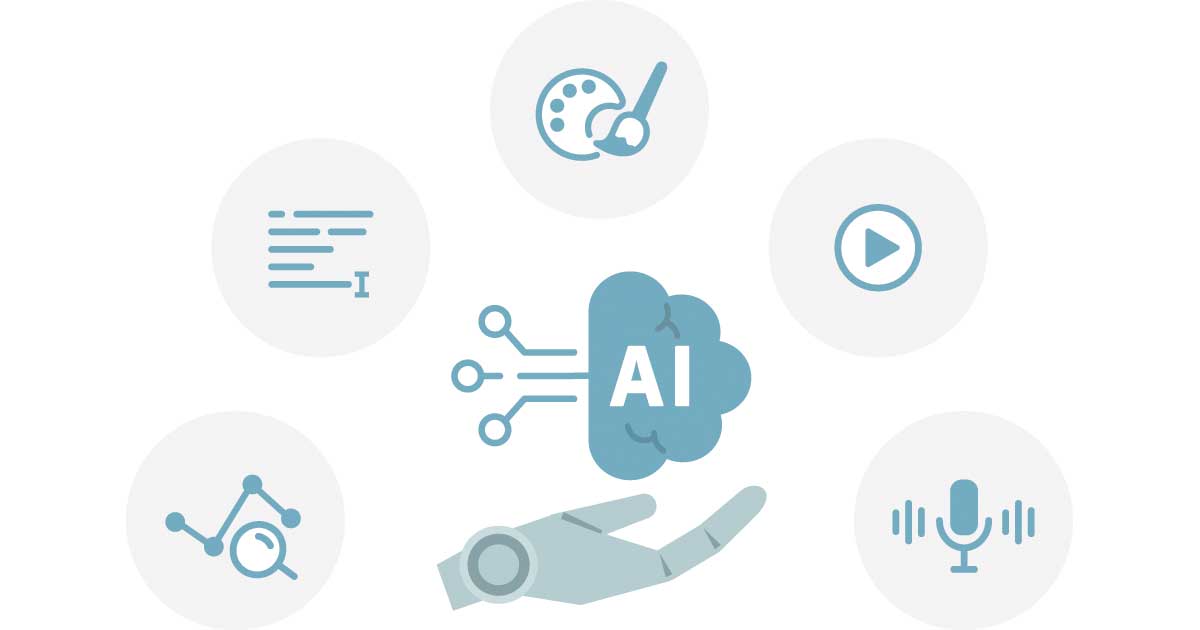
A custom AI agent is an AI powered assistant designed around a specific business function or workflow. It operates inside your environment and follows your rules.
Unlike generic AI tools, custom agents are:
- Purpose built around defined use cases
- Integrated with your approved systems
- Limited by your permissions and access controls
- Trained on your internal knowledge sources
- Designed to escalate rather than replace people
These agents are not general purpose chatbots. They are operational assets designed to reduce friction where automation alone falls short.
When Standard Automation Is No Longer Enough
Traditional automation works best when logic is clear and predictable. Over time, many businesses encounter scenarios where that model strains.
Typical triggers include:
Work that requires interpretation
Requests come in through email, forms, or chat and require understanding intent before routing or action can occur.
Information spread across systems
Answers require pulling data from SharePoint, ticketing platforms, CRMs, or documentation libraries.
High volume internal questions
Employees repeatedly ask where to find information, how to complete steps, or who owns a process.
Increasing exceptions
Edge cases grow as the business scales, making rule based automation fragile.
These are strong signals that an AI assisted layer may add value.
The Custom AI Agent Development Process
Building effective AI agents is not about experimentation. It requires a structured process that balances usability, accuracy, and control.
Below is how Louisville Geek approaches custom AI agent development.
Step 1: Identify the Right Use Case
Not every problem needs an AI agent. The first step is determining whether an agent will meaningfully reduce effort or risk.
Strong use cases usually have:
- Repeated questions or requests
- Heavy context or interpretation requirements
- Multiple systems involved
- Clear business ownership
- Defined success measures
Examples include internal support, onboarding guidance, request triage, or cross system reporting.
If a workflow can be handled purely through automation, an agent may not be necessary. Part of the process is saying no when a simpler solution fits better.
Step 2: Map the Workflow and Decision Points
Before any AI is built, the underlying process is documented.
This includes:
- How requests arrive
- What information is needed to respond
- Where decisions occur
- When escalation is required
- Which systems are involved
This mapping ensures the agent supports reality rather than assumptions. It also prevents AI from masking broken or unclear processes.
Step 3: Define Data Sources and Boundaries
Custom AI agents are only as good as the information they can access.
We work with clients to define:
- Approved data sources
- What content is in scope
- What content must be excluded
- How often information is updated
- Who owns the source material
Common sources include SharePoint, knowledge bases, ticketing systems, and internal documentation.
Just as important is defining what the agent should not answer. Clear boundaries protect accuracy and trust.
Step 4: Design Permissions and Guardrails
AI agents must respect existing security models.
We align the agent with:
- User roles and groups
- Least privilege access principles
- Sensitive data restrictions
- Industry and compliance requirements
Agents do not bypass permissions. They operate entirely within established access controls.
This step is significantly easier and safer when the environment is already supported through Managed IT Services.
Step 5: Build and Integrate the Agent
Once design is complete, the agent is built using appropriate platforms, often within the Microsoft ecosystem.
This may include:
- Azure OpenAI for language capabilities
- Microsoft Copilot foundations where appropriate
- Power Automate for workflow integration
- Power Platform tools for inputs and outputs
Integration is purposeful, not excessive. Each connection exists to support a defined outcome.
Step 6: Test With Real Scenarios
Testing goes beyond technical validation.
We test:
- Real employee questions
- Edge cases and ambiguous requests
- Escalation paths
- Response clarity and usefulness
- Performance under normal usage
This phase refines behavior, language, and accuracy before wider rollout.
Step 7: Launch With Training and Clear Expectations
Adoption matters as much as accuracy.
We help clients:
- Define when to use the agent
- Communicate what the agent can and cannot do
- Teach employees how to ask effective questions
- Reinforce escalation paths
This prevents confusion and builds confidence.
Step 8: Monitor, Refine, and Expand
AI agents are not set and forget solutions.
After launch, ongoing work includes:
- Reviewing usage patterns
- Updating knowledge sources
- Improving responses
- Adding new use cases
- Adjusting as systems change
This is where many project based efforts stall. Managed automation keeps agents aligned with the business as it evolves.
Why Managed IT Makes Custom AI Agents More Successful
Custom AI agents depend heavily on the health of the IT environment.
Identity, permissions, licensing, data organization, and system stability directly affect what an agent can do safely.
Businesses that already use Managed IT Services often see smoother deployments because:
- Access controls are already structured
- Systems are documented and monitored
- Security baselines are consistent
- Changes are coordinated
This foundation reduces friction and risk.
How Co‑Managed IT Supports Advanced AI Initiatives
For organizations with internal IT teams, Co‑Managed IT Services provide a balanced path forward.
Louisville Geek can support custom AI agent projects by:
- Providing architecture and integration expertise
- Supporting testing and refinement
- Assisting with documentation and ownership models
- Reducing operational burden on internal teams
This allows internal IT to stay in control while benefiting from specialized support.
How Louisville Geek Delivers Practical AI Agents
Louisville Geek builds custom AI agents with a focus on clarity, restraint, and outcomes.
Our AI & Automation Consulting Services help businesses:
- Decide when custom AI is appropriate
- Design agents around real workflows
- Integrate responsibly with existing systems
- Maintain security and governance
- Support growth and change over time
Custom AI agents are most powerful when they are treated as part of your operating model, not a novelty feature.
Ready to Explore Custom AI Agents the Right Way?
If automation is already in place but complexity keeps growing, a custom AI agent may be a smart next step.
Louisville Geek can help you evaluate the opportunity, design the right solution, and support it as your business evolves.
Explore our AI & Automation Consulting Services or contact us to start the conversation.